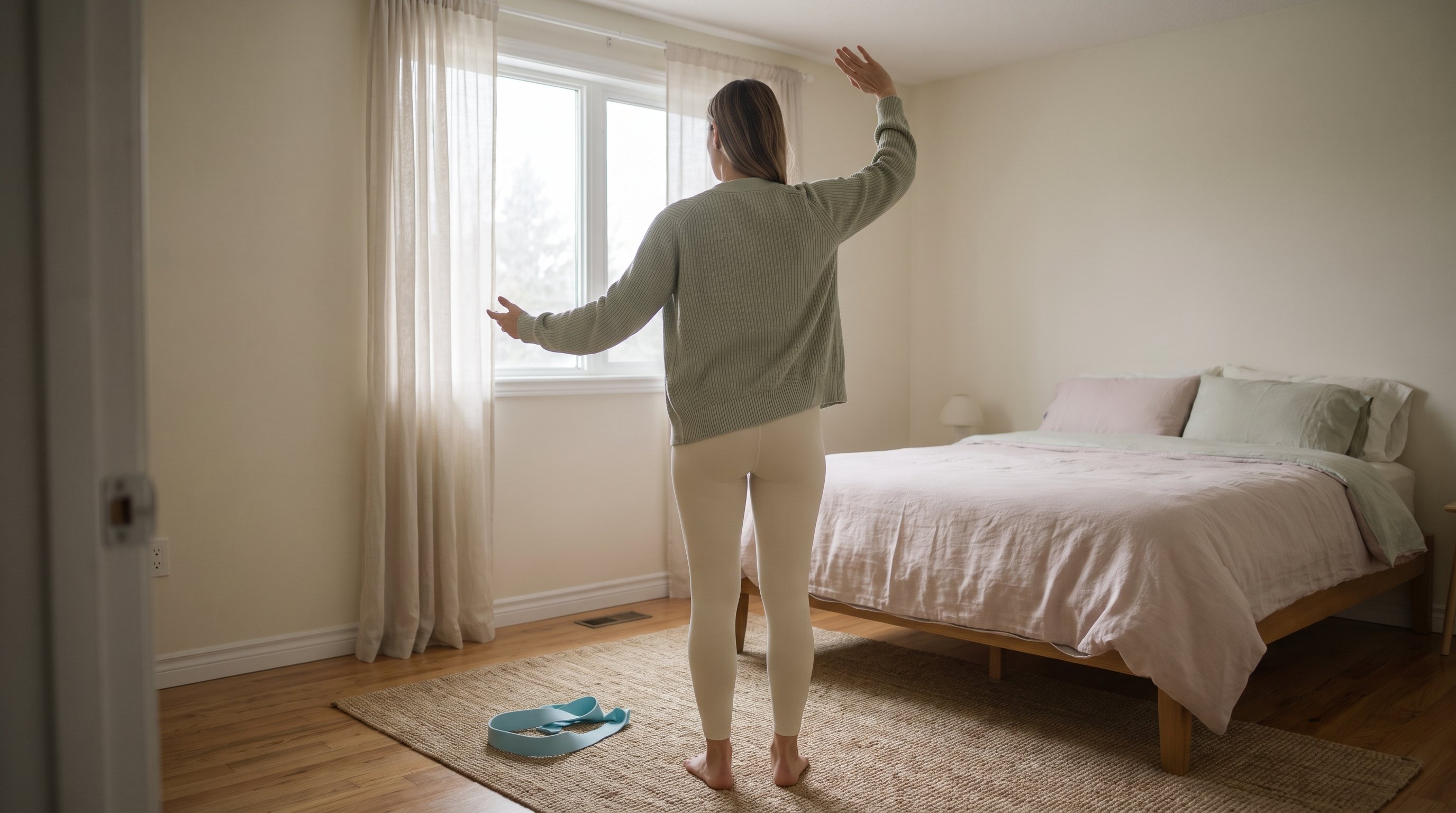
Beginner Stretching Routine: The Complete Guide
By:Author:Cortisol Detox Editorial
Updated on:October 20, 2026

- The Myth That Stretching Fixes Tight Hips Overnight
- How a Beginner Stretching Routine Actually Works
- What Changes the Result of Your Stretching
- A Sample Beginner Stretching Week to Copy
- Fitting Stretching Around a Full Diary
- When a Beginner Stretching Habit Starts to Feel Different
- Mistakes That Undo a Beginner Stretching Routine
- Building Your Beginner Stretching Routine With Cortisol Detox
- Picking Your First Stretch and Starting Today
A beginner stretching routine is a short, repeatable set of stretches done a few times a week to improve how far your joints move and how your muscles feel day to day.
It works because muscle and connective tissue adapt to repeated gentle tension - the nervous system slowly allows more range as it learns a stretch isn't a threat.
This guide covers what stretching can and can't do, how it actually works, a sample week, common mistakes, and how to keep it going past the first fortnight.
The Myth That Stretching Fixes Tight Hips Overnight
No single stretch fixes tight hips or a stiff back in one sitting, and no routine melts fat from any one part of the body - the body doesn't choose where it loses fat from, and stretching doesn't change that.
What actually happens is slower and still useful: repeated stretching trains your tolerance to the sensation of lengthening, and the muscle gradually allows more movement before it feels tight.
The honest version is this: a beginner stretching routine improves flexibility and comfort over weeks, not minutes, and it works best alongside general movement rather than as a stand-alone fix.
How a Beginner Stretching Routine Actually Works
The Nervous System Learns to Let Go
A stretch feels tight partly because the nervous system is protecting the muscle from a range it isn't used to - repeating the same gentle stretch teaches it that range is safe, so it relaxes a little more each time.
Tissue Adapts to Repeated, Gentle Load
Muscle and the tissue around it respond to consistent, mild tension by becoming more pliable over time, which is why a short daily or near-daily habit beats one long stretch session a week.
Neither mechanism needs force - holding a stretch to a point of mild tension, not pain, is what lets both processes do their work.
What Changes the Result of Your Stretching
Not every stretching habit pays off at the same rate - three things decide most of the difference.
What Moves the Needle Most
- Consistency over intensity - stretching for five to ten minutes most days beats one hard session a week, because the nervous system needs repeated, familiar input to adapt.
- Holding long enough - a stretch held for around twenty to thirty seconds gives the tissue time to settle, where a quick five-second tug barely registers.
- Matching stretches to your day - stretching the muscles that actually feel tight from sitting, walking or standing gets more out of the same ten minutes than a random routine.
A Sample Beginner Stretching Week to Copy
This is one way to structure a week without overthinking it - adjust the order to fit your day, not the other way round.
| Day | Focus |
|---|---|
| Monday | Neck, shoulders, upper back |
| Tuesday | Hips and lower back |
| Wednesday | Hamstrings and calves |
| Thursday | Rest or light repeat |
| Friday | Full body, five minutes |
| Weekend | Whatever feels tight |

Five to ten minutes a session is plenty for a beginner - the point is showing up most days, not turning it into a long workout.
Fitting Stretching Around a Full Diary
Most people don't skip stretching because it's hard - they skip it because it never gets a fixed slot in the day.
Attaching it to something already in the routine works better than planning a separate session: after brushing your teeth, before the shower, or right after getting out of bed.
This is where guided workouts and progress tracking can help in the background - keeping a short daily habit like stretching visible, so it doesn't quietly disappear after a busy week.
When a Beginner Stretching Habit Starts to Feel Different
Expect the first couple of weeks to feel unremarkable - the stretches themselves don't change much, but showing up matters more than the sensation does.
Range of movement tends to shift gradually rather than suddenly, and it's common to notice it indirectly first - easier to tie your shoes, less stiffness getting out of a chair.
Most people who quit do it in the first ten days, usually because they expected a dramatic change and didn't see one - sticking past that point is where the habit tends to settle in.
Mistakes That Undo a Beginner Stretching Routine
Stretching Into Pain
Pushing a stretch until it hurts tells the nervous system to tighten up, not relax - back off to a point of mild tension and the muscle responds better.
Bouncing Instead of Holding
Quick bouncing stretches don't give tissue time to adapt - a steady hold of twenty to thirty seconds does more with less effort.

Only Stretching When Something Hurts
Waiting for stiffness before stretching turns it into damage control - a short routine done regularly, tight or not, is what builds lasting range.
Skipping Days After a Missed Session
Missing one day doesn't undo progress, but treating it as a reason to quit does - picking the routine back up the next day is the whole skill.
Building Your Beginner Stretching Routine With Cortisol Detox
A stretching habit lasts longer when it isn't fighting the rest of your day for attention.
Cortisol Detox brings simple workouts, guided meditations and progress tracking into one place, so a short stretching session sits alongside the rest of your routine instead of competing with it.
Pairing stretching with its motivating challenges and progress tracking can make the habit easier to keep visible on the days motivation runs low.

Lower Stress Naturally
Feel Relaxed Again
Picking Your First Stretch and Starting Today
The simplest way to start a beginner stretching routine is to pick three stretches, hold each for twenty to thirty seconds, and do that tomorrow morning before anything else happens.
Cortisol Detox can sit alongside that habit, giving the rest of the day - meals, movement, rest - a structure that makes the stretching easier to keep up.
FAQ
Stretching supports mobility and comfort, not fat loss, since no stretch targets fat and the body doesn't lose fat from one chosen area. Pairing it with general movement and a sensible eating pattern does more for a deficit than stretching ever will.
A full workout and a stretching routine do different jobs, so it isn't really a competition. Stretching supports the range of movement a workout relies on, which is why many people do both rather than choosing one.
Starting range varies a lot between people, and that's normal rather than a sign something's wrong. Use a shallower version of the stretch and let the range build gradually instead of forcing the full position.
Attaching it to an existing daily moment, like right after waking up, makes it far easier to keep than treating it as a separate task. Tools like Cortisol Detox can help keep a short routine visible through progress tracking, so it's less likely to quietly drop off.
Share this post