Qigong for Beginners: How to Fit Movement Into Your Day
By:Author:Cortisol Detox Editorial
Updated on:October 20, 2026
- Does Qigong for Beginners Actually Do Anything
- How the Slow Movements and Breathing Actually Work
- How Many Minutes of Qigong a Beginner Actually Needs
- Qigong Versus a Structured Gym Routine
- Making Qigong Work on a Packed Weekday
- The Myth That Slow Movement Melts Fat From One Spot
- What Changes the Result for a Beginner Practice
- Mistakes That Stop a Qigong Habit Before It Starts
- Pairing Qigong Practice With Cortisol Detox Support
- Carrying a Daily Qigong Habit Forward
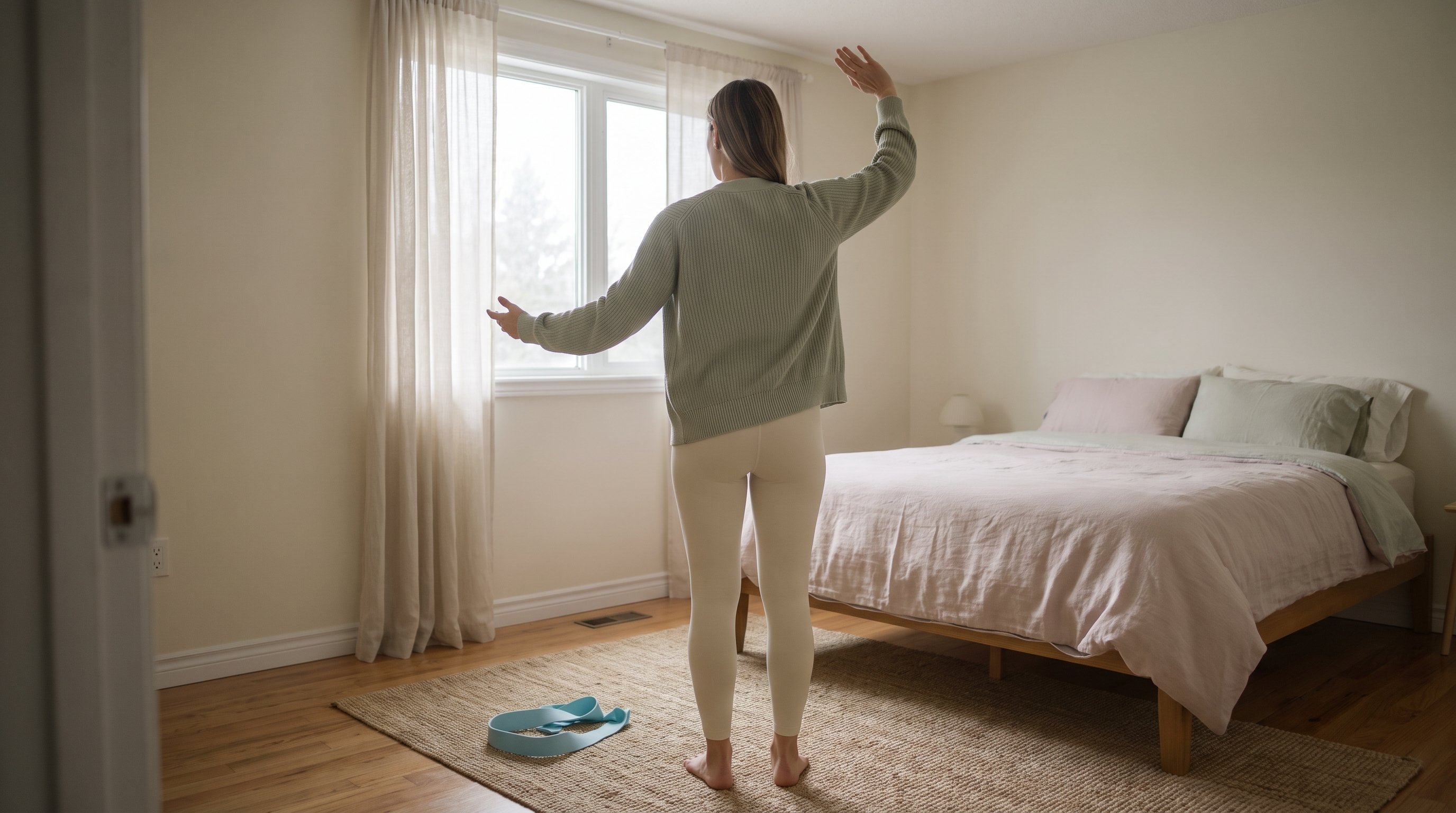
Qigong for beginners means slow, repeated movement paired with steady breathing, done standing or seated, for a few minutes at a time. You don't need flexibility, equipment or a background in anything - you need a quiet patch of floor and a willingness to move slower than feels natural at first.
The movements work because they combine light physical activity with controlled breathing, which together ask less of the body than a cardio session but still get you out of stillness and into motion.
This guide covers what qigong actually does, how often to practise, how it compares to harder workouts, and how to fit it into a week that's already full.
Does Qigong for Beginners Actually Do Anything
Yes, in the sense that any gentle, repeated movement done regularly adds up to more daily activity than sitting still - and that's the mechanism, not magic.
Qigong sessions are typically slow and low-effort compared to running or lifting, so the arithmetic is straightforward: ten minutes of standing movement is ten minutes your body isn't sedentary.
Do that most days and you've added roughly an hour of light movement across a week, on top of whatever else you already do.
It won't replace a structured workout and it isn't trying to - it's a low-barrier way to move daily, which matters because consistency, not intensity, is what most people struggle to maintain.
How the Slow Movements and Breathing Actually Work
Qigong isn't one thing - it's a set of simple movement patterns, usually repeated in sequence, paired with a breathing rhythm you control.
The Movement Side
Most beginner sequences involve shifting weight between legs, raising and lowering the arms, or gentle turning at the waist, all done slowly enough that balance and joints stay engaged without strain.
Because the pace is slow, you can hold a movement for a breath or two, which turns a simple arm raise into sustained low-level muscular work rather than a quick rep.
The Breathing Side
Breathing is usually slowed down and matched to the movement - inhale as you raise your arms, exhale as you lower them, for example.
Slower, deeper breathing on its own can shift you out of a rushed, shallow breathing pattern, and pairing it with movement gives your attention something simple to follow instead of wandering.
How Many Minutes of Qigong a Beginner Actually Needs
Starting Small on Purpose
Ten to fifteen minutes a day is enough to build the habit without it feeling like a chore, and that's the number worth aiming for in the first few weeks.
You can split that into two five-minute blocks if a single sitting feels like too much, or stretch it to twenty minutes on days you've got more time.

The table below gives a rough weekly shape - treat it as a starting point, not a rule.
| Day | Focus | Time |
|---|---|---|
| Monday | Standing weight shifts | 10 minutes |
| Wednesday | Arm raises with breath | 10 minutes |
| Friday | Seated gentle turns | 10 minutes |
| Saturday | Full beginner sequence | 15 minutes |
| Sunday | Rest or short walk | 0 to 10 minutes |
Qigong Versus a Structured Gym Routine
A structured gym routine - sets, reps, progressive weights - builds strength faster per hour spent, that's just true.
But a gym session asks more of you: travel, kit, a block of uninterrupted time, and often some soreness to manage afterwards.
Qigong asks for a few square metres of floor and ten minutes, which is why it gets done on the days a gym session gets skipped.
The easier option wins not because it's better exercise, but because it's the one you'll actually repeat often enough for the daily movement to add up.
Making Qigong Work on a Packed Weekday
The sessions that survive a busy week are the ones that don't need preparation - no changing into workout clothes, no travel, no warm-up routine.
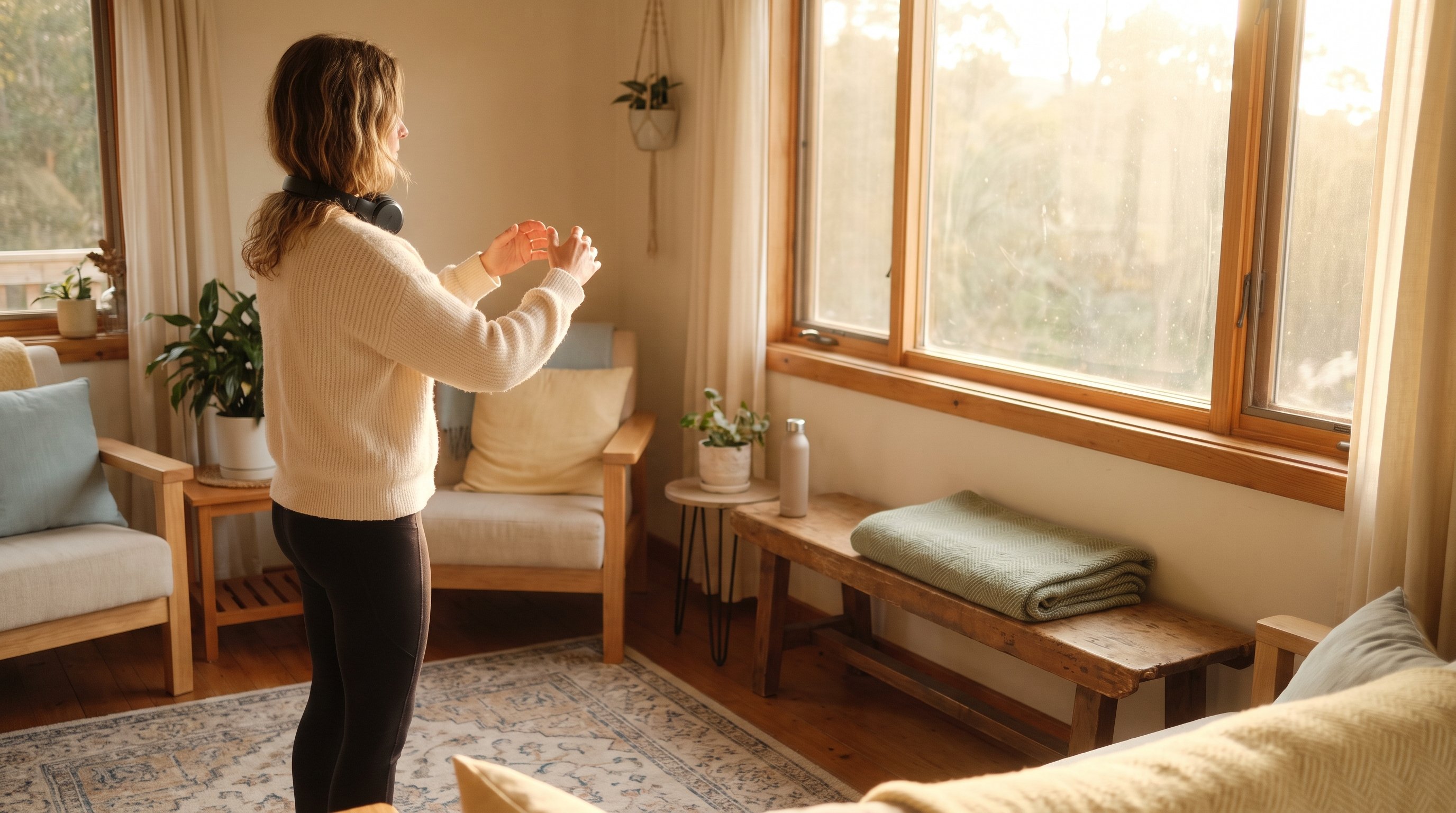
Doing a short sequence by the kitchen counter while the kettle boils, or at a desk before the first meeting, counts just as much as a dedicated session on a mat.
Keeping the daily movement consistent is easier when it's logged alongside the rest of your routine, which is where a progress tracking feature can help - seeing a short qigong session sit next to your meals and water for the day makes it feel like part of the plan, not an extra task.
The Myth That Slow Movement Melts Fat From One Spot
Some beginner guides imply that a gentle practice like qigong can target fat around the stomach or arms - it can't, and no form of exercise can choose where the body loses fat from.
The body draws on fat stores across the whole body based on overall energy balance, not on which muscles just moved.
What qigong honestly offers is daily movement, steadier breathing and a habit that's easy to keep - useful on its own terms, without needing a spot-reduction promise attached to it.
What Changes the Result for a Beginner Practice
Three factors decide whether a few weeks of qigong turns into a lasting habit or fades out by the second month.
What Matters Most
- How often you show up - ten minutes most days beats thirty minutes once a week, because the habit needs repetition more than duration.
- Whether you track it at all - a session that isn't recorded anywhere is easy to forget happened, which makes it easy to skip tomorrow too.
- What else fills the rest of your day - a short practice sits inside a wider pattern of meals, sleep and other movement, and none of those work in isolation.
Mistakes That Stop a Qigong Habit Before It Starts
Picking a Long, Complicated Sequence First
Starting with a forty-minute routine full of unfamiliar movements is a fast way to quit by day three - pick one short, simple sequence and repeat it until it's familiar.
Treating It As a Cardio Workout
Rushing through the movements to raise your heart rate defeats the point - slow it down, even if it feels too easy at first.
Only Practising When Motivation Is High
Waiting to feel like it means some weeks get skipped entirely - attach the practice to something you already do daily, like right after brushing your teeth.
Expecting It to Replace All Other Movement
Qigong is light activity, not a substitute for walking or strength work - let it sit alongside your other habits rather than taking their place.
Pairing Qigong Practice With Cortisol Detox Support
A short daily practice works best as one piece of a wider routine, which is exactly what Cortisol Detox is built around.
Alongside simple workouts and guided meditations you can use on the same days as a qigong session, Cortisol Detox includes an anti-cortisol meal plan built around food you already like, so the movement side of your routine isn't fighting an unrealistic eating plan.
Progress tracking and motivating challenges keep the whole thing visible day to day, which makes it easier to notice when a habit like qigong is actually sticking.
Lower Stress Naturally
Feel Relaxed Again
Carrying a Daily Qigong Habit Forward
Pick one short sequence, do it tomorrow morning for ten minutes, and repeat it for a week before changing anything.
That single repeated habit, tracked alongside meals and other movement in a dedicated app, is a realistic starting point - not a finished routine, just the first honest step toward one.
FAQ
On its own, a short daily practice adds light movement to your week, which plays a small part in overall energy balance alongside eating habits. Pairing it with Cortisol Detox, which tracks meals and movement together, gives that small contribution more context.
It's lower intensity than cardio or strength training, so it won't build fitness at the same rate. But low intensity still counts as movement, and movement done daily adds up in a way that an occasional hard workout can't match.
A beginner sequence needs little more than space to stand and raise your arms, which most rooms allow. Seated versions work just as well if floor space or standing isn't an option.
The most common drop-off point is choosing a routine that's too long or too complicated to repeat easily. Keeping the session short, simple and attached to an existing daily habit is what tends to carry it past the first few weeks.
Share this post