Tai Chi for Seniors: A Practical Weekly Balance Guide
By:Author:Cortisol Detox Editorial
Updated on:October 20, 2026
- Does Tai Chi Actually Improve Balance for Seniors?
- Tai Chi Versus Chair Exercise: Which Builds More Stability
- Why Slow Movement Sticks Better Than Intense Balance Drills
- Adapting Tai Chi to Different Mobility Levels
- Making Tai Chi Part of an Ordinary Week
- The Myth That Tai Chi Reverses Age-Related Decline
- Pairing Tai Chi Habits With Cortisol Detox
- Starting This Week Without Overcomplicating It
Tai chi for seniors works because it trains balance and leg strength through slow, controlled shifts of weight - the same movement pattern that prevents a stumble from becoming a fall.
The mechanism is simple: standing on one leg, shifting weight slowly, and coordinating arms with breath all ask the body to practise the exact skills it needs to stay upright.
This guide covers whether tai chi actually delivers, how it compares with other gentle options, who it suits, and how to build it into a normal week without turning it into a chore.
Does Tai Chi Actually Improve Balance for Seniors?
Balance is largely a skill, not just a fixed trait - the nervous system gets better at sensing weight shifts and correcting them the more it practises that exact movement.
Tai chi is almost entirely built from slow weight transfers, single-leg stances, and controlled turns, which is why it maps so directly onto real-world balance demands like stepping off a kerb or turning to answer the door.
The Arithmetic of a Short Session
A typical tai chi set runs 10 to 20 minutes and includes dozens of weight shifts - if someone practises most days, that is several hundred balance repetitions a week without any special equipment.
None of this is instant, and nobody should expect a single session to change anything noticeable.
What it does offer is repeated, low-risk practice of the movement pattern that keeps people steady, done at a pace that's easy to sustain.
Tai Chi Versus Chair Exercise: Which Builds More Stability
Both tai chi and chair exercise are gentle, low-impact options, but they ask the body for different things.
Tai chi demands standing balance and weight transfer, which is exactly what most falls expose as weak - chair exercise is excellent for joint mobility and strength but doesn't train that same standing-balance skill in the same way.
| Factor | Tai Chi | Chair Exercise |
|---|---|---|
| Standing balance practice | Core focus | Minimal |
| Joint impact | Very low | Very low |
| Equipment needed | None | Sturdy chair |
| Works while seated | No | Yes |
| Typical session length | 10 to 20 min | 10 to 20 min |
Neither one beats the other outright - someone recovering from a knee issue or managing fatigue may need chair work first, then add standing tai chi once they feel steadier.
Why Slow Movement Sticks Better Than Intense Balance Drills
The harder alternative here is a structured balance-training programme with fast reaction drills and resistance bands - genuinely effective, but demanding to start and easy to quit after a bad week.
Tai chi asks for none of that intensity, which is precisely why people keep showing up.
A slow, repeatable sequence done at home or in a park doesn't require motivation to push through discomfort - it just requires ten minutes and a flat patch of floor.
Consistency is unglamorous and it wins anyway: five quiet sessions a week beat one intense class that gets skipped three weeks running because it feels like too much.
Adapting Tai Chi to Different Mobility Levels
New to Any Kind of Exercise
Start with just the weight-shifting part of a tai chi set, holding onto a counter or wall if needed, before adding the arm movements.
Managing Joint Pain or Stiffness
Shorten the range of each stance and keep knees softly bent rather than deep - tai chi has no fixed depth requirement, so smaller movements still count.
Already Fairly Active
Add longer sequences or slightly lower stances to increase the demand on the legs without adding any impact.
Recovering From a Fall or Illness
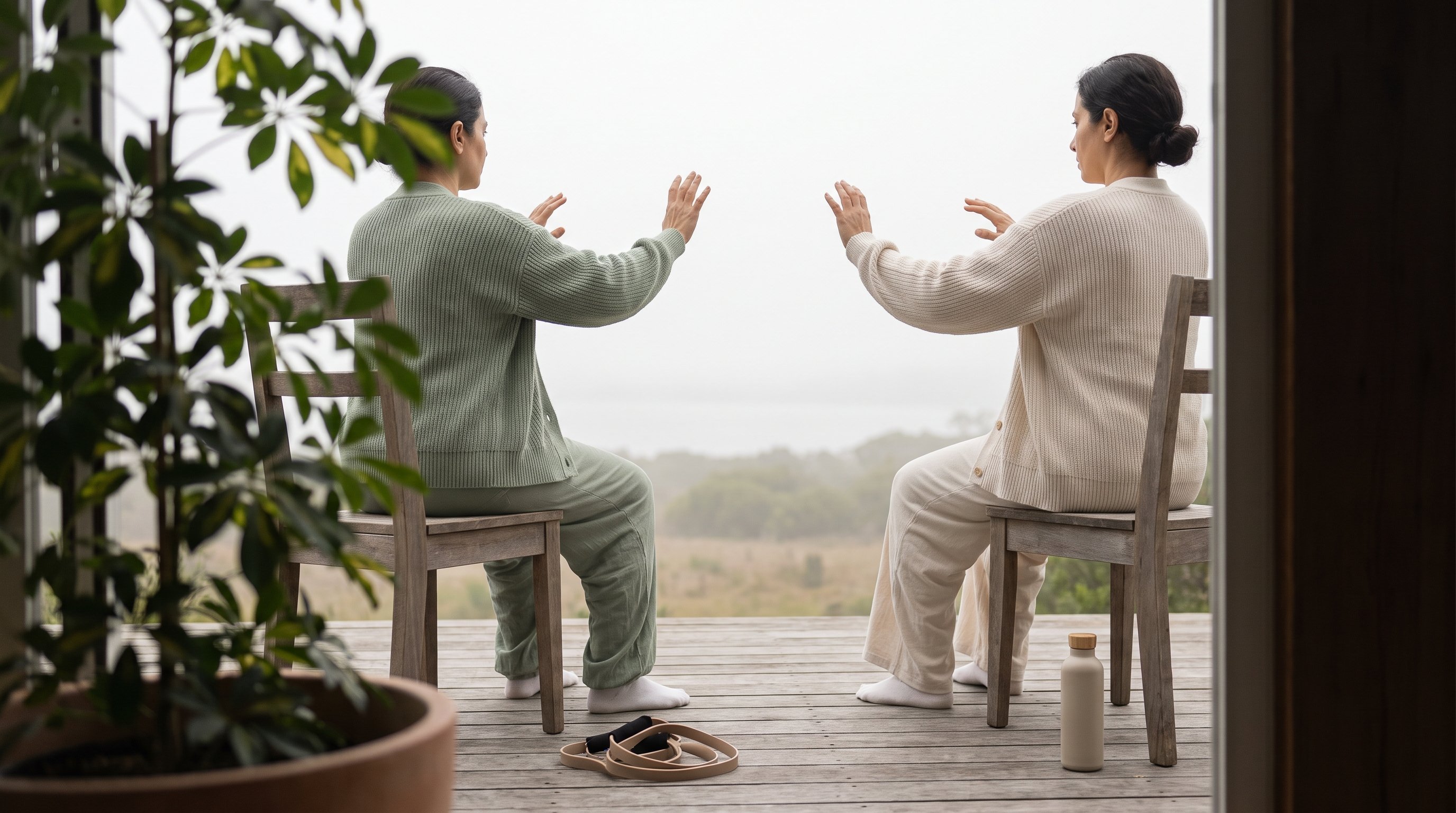
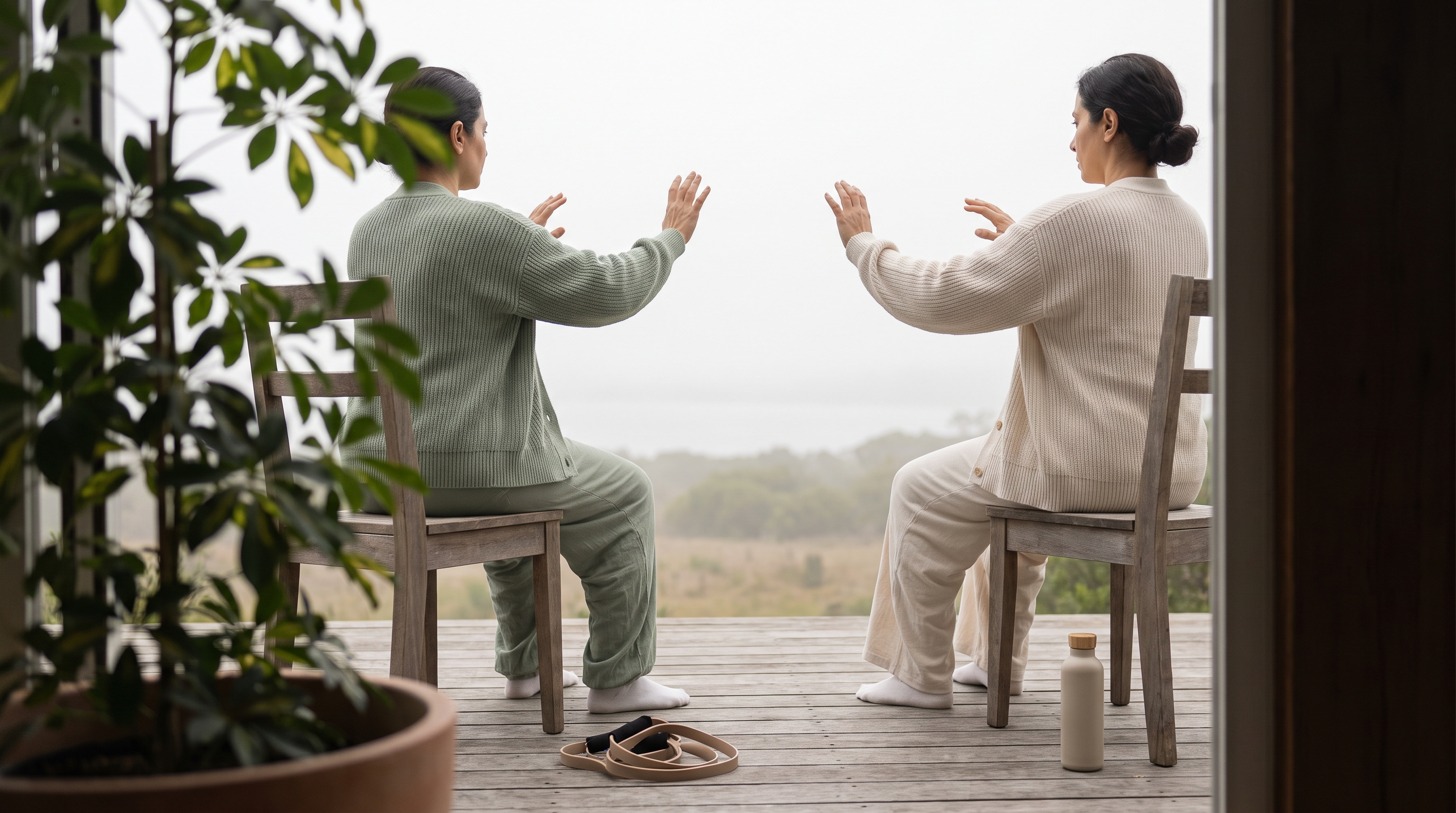
Begin seated, practising the arm and breath patterns only, then introduce standing weight shifts once confidence returns.
Making Tai Chi Part of an Ordinary Week
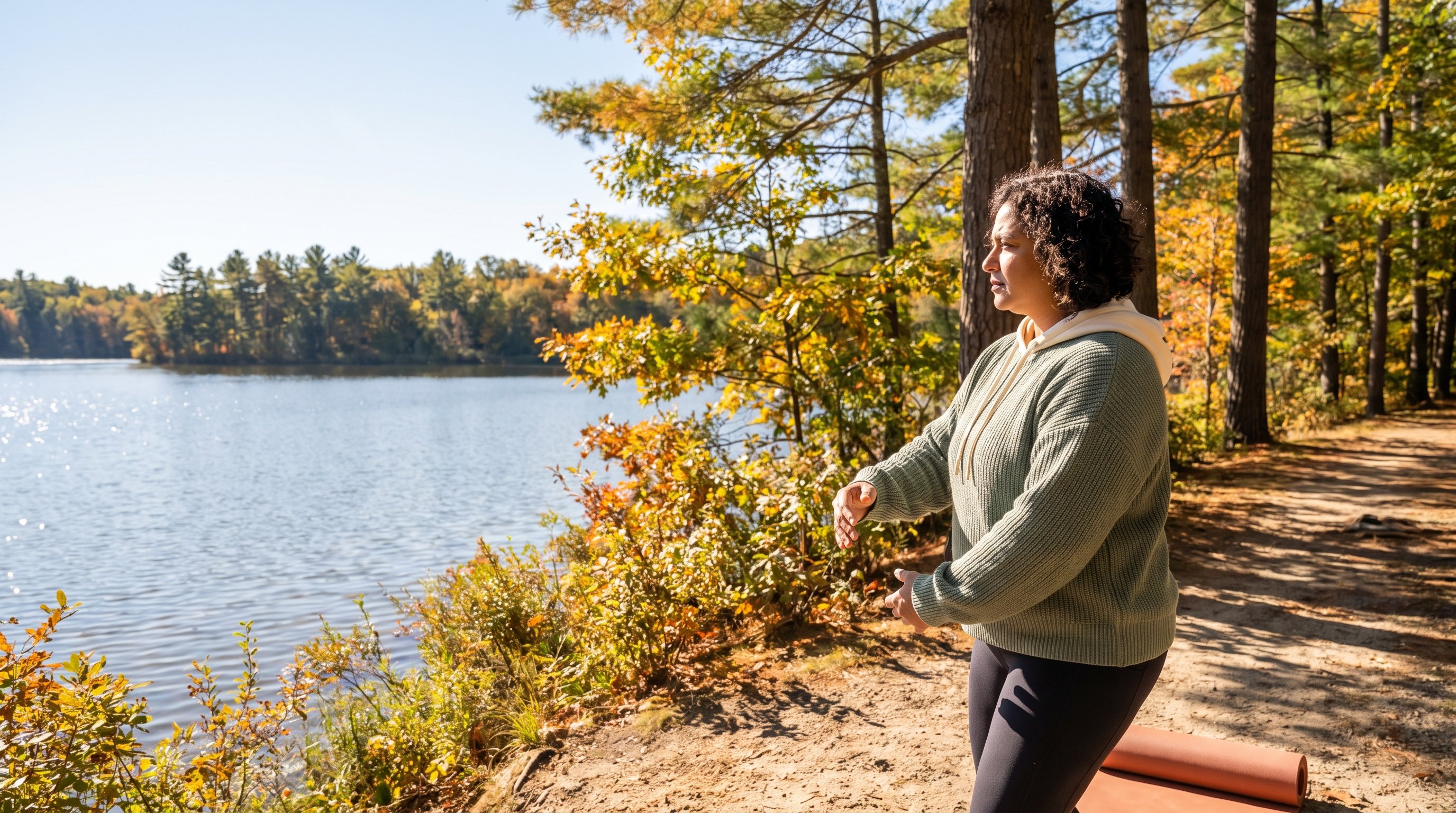
The easiest way to keep tai chi going is to attach it to something already happening - right after the morning kettle boils, or before sitting down for the evening news.
Ten minutes, most days, in the same spot removes the need to decide anything each time.
This is also where tracking helps without turning movement into another task to manage - a balance and wellness app keeps steps, water and simple workouts like this in one place, so a short tai chi session shows up as progress rather than disappearing into the day.
Pairing that with a meal plan built around food already enjoyed, rather than a restrictive list, makes the whole week feel manageable instead of effortful.
The Myth That Tai Chi Reverses Age-Related Decline
Tai chi does not reverse ageing, and nobody honest will claim it stops the body's natural changes over time.
What it realistically offers is practice - repeated, low-impact rehearsal of the balance and coordination skills that tend to fade without use.
That's a meaningfully different promise from a cure, and it's one that holds up: a skill practised regularly stays sharper than a skill left idle, at any age.

Pairing Tai Chi Habits With Cortisol Detox
Tai chi handles the movement side of staying steady and active, but what someone eats and how they manage daily stress plays a role too.
Cortisol Detox brings together an anti-cortisol meal plan, simple guided workouts, short meditations, and progress tracking, so the tai chi habit sits alongside everything else instead of competing with it.
Rather than adding more to think about, it gives one place to log a short session, note a glass of water, or follow a guided meditation on a day that feels heavier than usual.
Lower Stress Naturally
Feel Relaxed Again
Starting This Week Without Overcomplicating It
Pick one short tai chi sequence, one time of day, and one spot in the home - that's the whole plan for week one.
Everything else, including longer sets or added strength work, can wait until the basic habit feels normal rather than effortful.
A balance and wellness app can sit alongside that first week, giving a simple way to track the session and notice the habit actually building.
FAQ
Most days, for 10 to 20 minutes, works better than one long weekly class because balance is a skill that responds to repetition. Short, frequent practice beats occasional long sessions.
Gentle doesn't mean ineffective - the slow pace is what allows safe, repeated practice of weight shifts that build standing stability. Intensity isn't the same thing as usefulness here.
Start seated, practising arm movement and breath, then add standing weight shifts near a wall or counter once confidence grows. There's no rule that says it has to be done standing from day one.
Tai chi handles the movement and balance side, while Cortisol Detox brings meal plans, guided workouts and tracking into one place so progress doesn't get lost. The two work on different parts of the same goal.
Share this post