Anti Inflammatory Foods: Practical Whole-Food Swaps
By:Author:Cortisol Detox Editorial
Updated on:October 20, 2026
- Do Anti Inflammatory Foods Actually Make a Difference
- What Happens Inside the Body When You Swap Foods
- How Many Anti Inflammatory Meals You Need Each Day
- Swapping Meals Beats Cutting Entire Food Groups
- Making Whole-Food Swaps Work on a Real Week
- The Myth That One Food Cures Inflammation Overnight
- What Decides Whether the Swap Pays Off
- Mistakes That Undo Anti Inflammatory Eating
- Turning Anti Inflammatory Foods Into a Daily Plan With Cortisol Detox
- Starting Your Own Anti Inflammatory Swap Tomorrow
Anti inflammatory foods are not a cure or a quick fix - they're whole foods that, eaten regularly instead of heavily processed alternatives, support a body that's already working to keep itself steady.
The mechanism is simple: foods high in refined sugar, refined oils and ultra-processed ingredients tend to spike blood sugar and stress hormones, while foods closer to their natural state tend not to.
This guide covers what the swap actually does, how much of it matters, what a day looks like in practice, and the mistakes that quietly undo the effort.
Do Anti Inflammatory Foods Actually Make a Difference
Swapping toward anti inflammatory foods works because of what it replaces, not because any single ingredient has special powers.
A diet heavy in fried food, refined carbohydrate and added sugar keeps blood sugar bouncing, and that bouncing keeps stress hormones like cortisol more active than they need to be.
Swap a sugary breakfast for one built on protein, fibre and healthy fat, and that same bounce has less reason to happen - the arithmetic is about what's on the plate, not magic in any one food.
None of this targets a body area or melts anything from one spot - the body does not work that way, and no food changes where fat sits.
What Happens Inside the Body When You Swap Foods
Blood Sugar Stability Over Spikes
Whole foods with fibre and protein digest slower than refined carbohydrate, so blood sugar rises and falls gently instead of spiking and crashing - a flatter curve means fewer hormonal swings asking the body to compensate.
Fewer Processed Inputs, More Whole Ones
Oily fish, leafy greens, berries, nuts and olive oil bring fats and plant compounds that whole, unprocessed food naturally carries, while swapping out fried and packaged food removes some of the inputs that keep the body in a reactive state.
How Many Anti Inflammatory Meals You Need Each Day
Aiming for Most Meals, Not Every Bite
There's no strict number to hit - the practical target is making most meals, most days, lean toward whole foods rather than demanding perfection at every sitting.
| Common Choice | Whole-Food Swap |
|---|---|
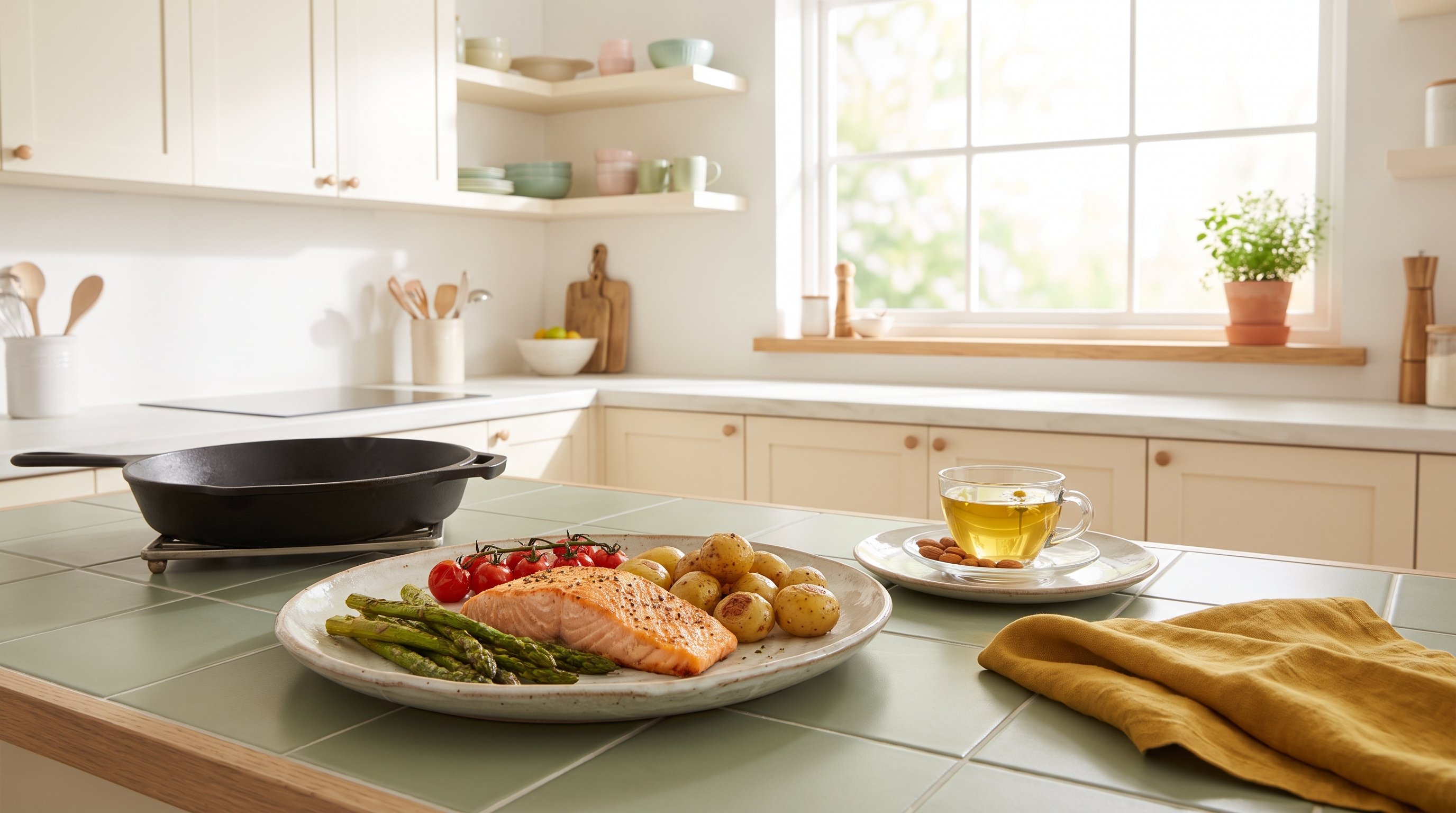
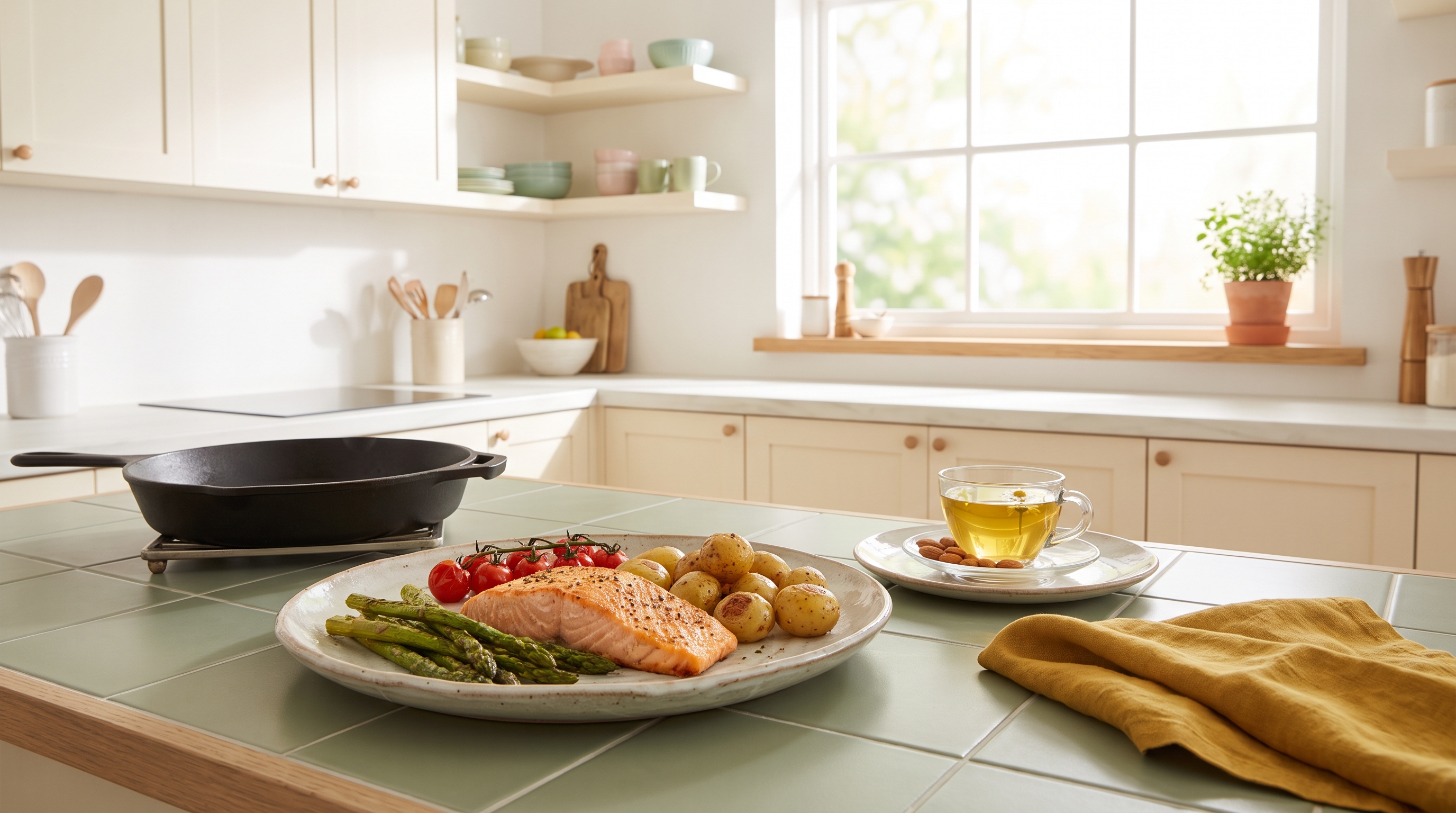
| Fried chicken | Baked or grilled fish |
| White bread | Oats or wholegrain bread |
| Sugary cereal | Berries with plain yoghurt |
| Vegetable oil fry | Olive oil drizzle |
| Packaged snack bar | Handful of nuts |

Three or four swaps like these across a day add up faster than one dramatic overhaul ever will.
Swapping Meals Beats Cutting Entire Food Groups
Cutting out entire food groups - no carbs, no dairy, no fat - sounds decisive, but it's hard to sustain and often gets abandoned within weeks.
Swapping specific meals for whole-food versions asks less of you day to day, which is exactly why it tends to stick longer.
A sustainable habit held for months will always outperform a strict rule broken after three weeks - consistency, unglamorous as it is, wins anyway.
Making Whole-Food Swaps Work on a Real Week
Real weeks involve rushed mornings, takeaway temptations and evenings with no energy left to cook, so the swap has to survive contact with that reality.
Keep a short list of easy whole-food options on hand - frozen vegetables, tinned fish, plain yoghurt, oats - so the better choice is also the convenient one.
A whole-food meal plan fits here by building around food you already like, so the swap feels like a small adjustment rather than a new diet to learn from scratch.
The Myth That One Food Cures Inflammation Overnight
No single food - turmeric, berries, salmon, green tea - cures anything or reverses inflammation overnight, and any claim that suggests otherwise is worth being sceptical of.
The body responds to patterns held over time, not to one ingredient added to an otherwise unchanged plate.
The honest answer is that steady, repeated whole-food choices shift the overall pattern - there's no overnight version of this, and expecting one just sets up disappointment.
What Decides Whether the Swap Pays Off
Three factors matter more than any single food choice.
What Changes the Outcome
- Consistency across weeks - occasional good meals barely register against a pattern held for months
- What gets replaced, not added - swapping out fried and processed food matters more than piling extra vegetables on top of the same old plate
- Sleep and stress alongside food - a flat blood sugar day still competes with poor sleep or constant pressure, so food is one part of a wider pattern
Mistakes That Undo Anti Inflammatory Eating
Treating It As All-Or-Nothing
Trying to overhaul every meal at once usually collapses within a fortnight - pick two or three swaps to start and build from there.
Chasing Superfoods Instead of Patterns
Adding one trendy ingredient to a diet otherwise full of processed food won't shift much - focus on what gets removed, not what gets sprinkled on top.

Ignoring Portion Size Entirely
Even whole foods add up in volume, so pair the quality swap with reasonable portions rather than unlimited servings.
Skipping Meals Then Overeating Later
Long gaps between meals often lead to a rushed, less thoughtful choice later - regular meals make the whole-food swap easier to keep up.
Turning Anti Inflammatory Foods Into a Daily Plan With Cortisol Detox
Knowing which swaps help is one thing - fitting them into a plan you'll actually follow on a Tuesday evening is another.
Cortisol Detox pairs anti-cortisol meal plans with simple workouts, guided meditations, motivating challenges and progress tracking, so the food swap sits inside a wider routine instead of standing alone.
Keeping steps, water and weight in one place makes it easier to see whether the swaps are actually part of a consistent week.
Lower Stress Naturally
Feel Relaxed Again
Starting Your Own Anti Inflammatory Swap Tomorrow
Pick one meal tomorrow and swap it - a sugary breakfast for oats and berries, or a fried lunch for something grilled - and notice how manageable that single change feels.
Meal planning and tracking tools can help turn that single swap into a routine, with a plan built around the choices you're already comfortable making.
FAQ
They work in the sense that whole foods replacing processed ones tend to flatten blood sugar swings and support steadier energy - there's no single food that acts like a switch.
No - it's a swap-based approach, not a restriction list, so nothing gets fully banned and no food group gets cut out entirely.
Frozen vegetables, tinned fish and plain yoghurt count as whole-food choices too, and Cortisol Detox builds plans around food that's simple to prepare rather than demanding complicated cooking.
Motivation fades when every meal feels like a rule to follow, so starting with two or three swaps rather than a full overhaul tends to hold up better over time.
Share this post