Best Foods for Energy: A Practical Plan for Steady Fuel
By:Author:Cortisol Detox Editorial
Updated on:October 20, 2026
- What a Full Day of Steady-Fuel Eating Looks Like
- How Often You Should Eat to Keep Energy Level
- Why Simple Food Swaps Beat Strict Elimination Diets
- Making Steady-Energy Eating Work on a Real Week
- Adjusting the Energy-Food Approach to Your Own Situation
- When Steadier Energy From Food Starts to Show Up
- Tracking Energy-Boosting Habits Through Cortisol Detox
- Choosing One Energy-Steadying Food Change This Week
The best foods for energy are the ones that release glucose slowly: whole grains, protein at every meal, and fibre-rich vegetables, rather than anything fast-burning like refined sugar.
Energy crashes usually come from blood sugar spiking then dropping hard, which pushes the body to release stress hormones to compensate and leaves you reaching for more quick carbs to recover.
This guide covers what a steady-fuel day looks like, how often to eat for consistent output, why the easier swaps beat strict diets, and how to adapt the approach to your own week.
What a Full Day of Steady-Fuel Eating Looks Like
A day built for energy does not need to be complicated. It just needs protein, fibre and slow-release carbs showing up together, meal after meal.
A Sample Day
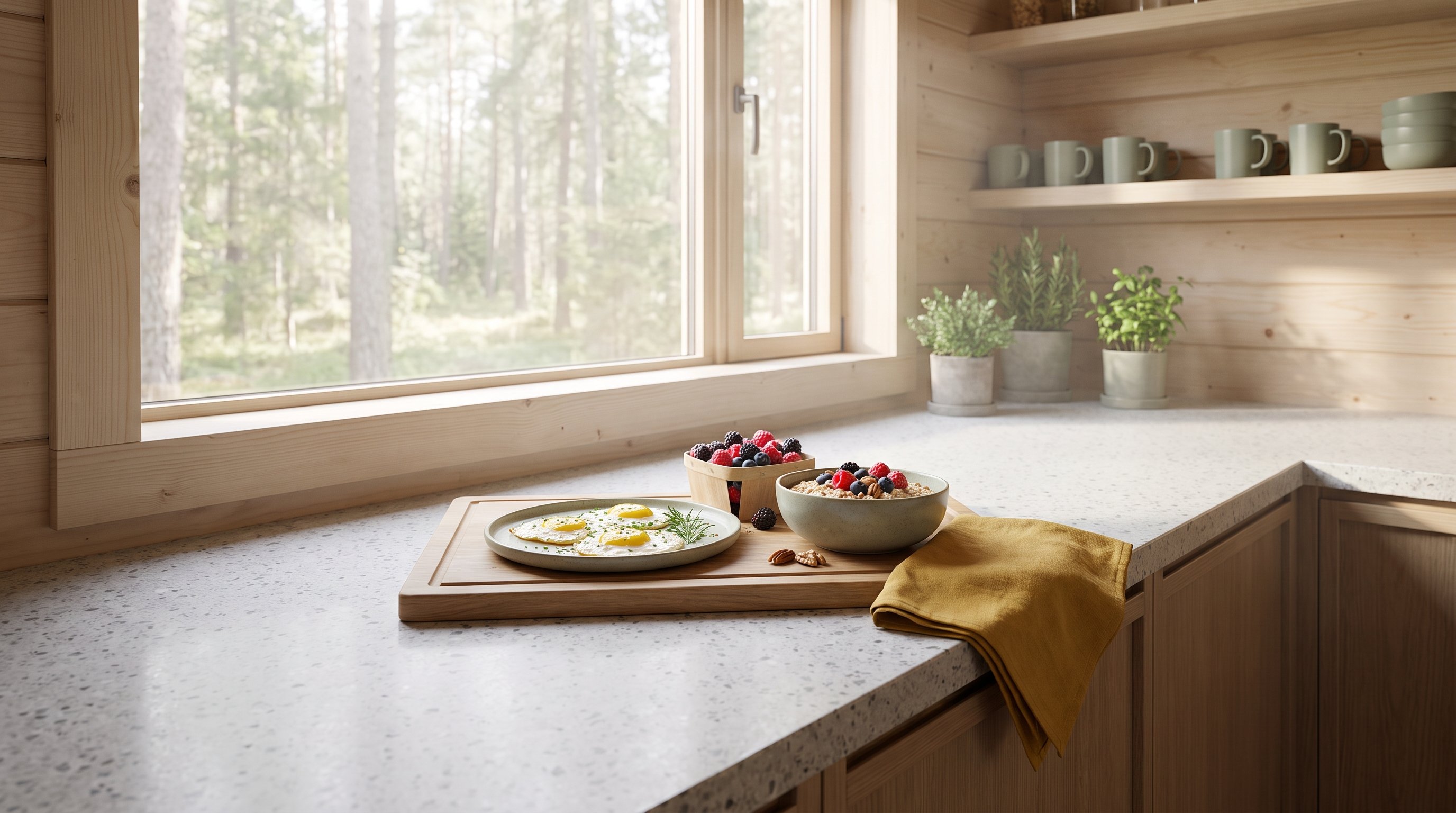
- Breakfast - eggs with oats and berries, giving protein and slow carbs together
- Mid-morning - a handful of nuts with a piece of fruit
- Lunch - grilled chicken or beans with brown rice and mixed vegetables
- Afternoon - plain yoghurt with seeds
- Dinner - fish or lentils with sweet potato and leafy greens
Notice there is no single hero food doing all the work. It is the combination, repeated through the day, that keeps blood sugar from swinging.
How Often You Should Eat to Keep Energy Level
Quantity matters less than spacing when the goal is steady energy rather than a short burst.
A Simple Spacing Target
Aim to eat roughly every three to four hours, which for most people means three meals plus one or two small snacks.

| Meal | Timing | Focus |
|---|---|---|
| Breakfast | Within an hour of waking | Protein plus slow carbs |
| Snack | Mid-morning | Protein or fibre |
| Lunch | Midday | Protein, carbs, vegetables |
| Snack | Mid-afternoon | Small protein hit |
| Dinner | Early evening | Protein plus fibre-rich carbs |
This is a starting point, not a rule. Some people feel fine with three meals and no snacks; the pattern matters more than the exact count.
Why Simple Food Swaps Beat Strict Elimination Diets
There are two ways to chase steady energy: cut out entire food groups, or swap the version of a food you already eat for one that digests more slowly.
Cutting carbs entirely or going keto can work for some people short term, but it asks for constant vigilance and makes eating out, family meals and social life harder to manage.

Swapping white bread for wholegrain, or white rice for brown, keeps the meal familiar while slowing the glucose release.
The swap route wins on adherence because it does not ask you to give anything up, just to choose a slower-burning version of the same thing.
Making Steady-Energy Eating Work on a Real Week
Most weeks do not look like the tidy sample day above. There are early mornings, meetings that eat lunch, and evenings where cooking feels like the last thing on the list.
The practical fix is to keep two or three go-to combinations on hand, so you are never choosing between a proper meal and whatever is fastest.
A meal plan built around food you already like removes a lot of that daily decision-making, which is where Cortisol Detox fits in - it keeps meals, steps and water in one place so the steady-energy pattern does not depend on willpower every single day.
Adjusting the Energy-Food Approach to Your Own Situation
If You Are Just Starting Out
Pick one meal to fix first, usually breakfast, and add protein to it before worrying about anything else.
If You Are Short on Time
Batch a base like cooked grains or beans once and build different meals around it through the week.
If You Are Managing an Older Household
Smaller, more frequent meals with soft protein sources like eggs, yoghurt or fish tend to sit easier and still deliver steady fuel.
If You Are Often on the Move
Portable combinations like nuts with fruit, or a wrap with protein and vegetables, keep the same slow-release principle without needing a kitchen.
When Steadier Energy From Food Starts to Show Up
Be patient with how this feels at first. Old habits around sugary snacks and skipped meals do not disappear overnight, and the afternoon slump may still turn up for a while.
Most people notice the biggest drop-off point is around the second week, when the novelty wears off and the original habits start calling again.
Sticking with the pattern rather than chasing a faster result is what tends to make the difference over time.
Tracking Energy-Boosting Habits Through Cortisol Detox
Knowing which foods help is one thing. Actually keeping the pattern going on a Tuesday evening when you are tired is another.
Cortisol Detox brings together an anti-cortisol meal plan, simple workouts, guided meditations, motivating challenges and progress tracking, so the steady-energy habits from this guide sit inside one routine instead of several separate efforts.
Lower Stress Naturally
Feel Relaxed Again
Choosing One Energy-Steadying Food Change This Week
Steady energy does not come from a single ingredient. It comes from pairing protein, fibre and slow carbs at most meals, spaced through the day instead of piled into one.
Pick one meal to adjust this week, and let steady-energy planning handle the rest so the change actually sticks past the first few days.
FAQ
There is no one food that does the job alone; eggs, oats, nuts, beans and leafy greens all help because they slow glucose release when eaten together. The combination across a meal matters more than any individual ingredient.
Cutting sugar completely can feel restrictive and hard to hold for long, which often leads back to the same crash-and-crave cycle. Swapping to slower-release foods tends to be easier to sustain, which matters more than speed.
Portable combinations like nuts with fruit or yoghurt with seeds take seconds to prepare and still deliver protein and fibre together. A structured meal plan built around food people already eat cuts down the planning time.
Old eating patterns do not vanish immediately, and a stressful week can easily bring back sugary snacking out of habit. Expecting the odd dip and returning to the pattern afterwards works better than aiming for perfection.
Share this post