Gut Health Foods: Whole Food Choices That Truly Work
By:Author:Cortisol Detox Editorial
Updated on:October 20, 2026
- The Myth That One Superfood Fixes Digestion
- How Fibre and Fermented Foods Actually Support the Gut
- What Actually Decides Whether Gut Health Foods Pay Off
- A Sample Day Built Around Gut-Supporting Foods
- Fitting Gut-Friendly Eating Around a Full Week
- When Gut Changes From Food Start to Feel Different
- Mistakes That Undo a Gut Health Food Routine
- Building Gut Health Foods Into a Plan With Cortisol Detox
- Choosing Your First Gut-Supporting Swap This Week
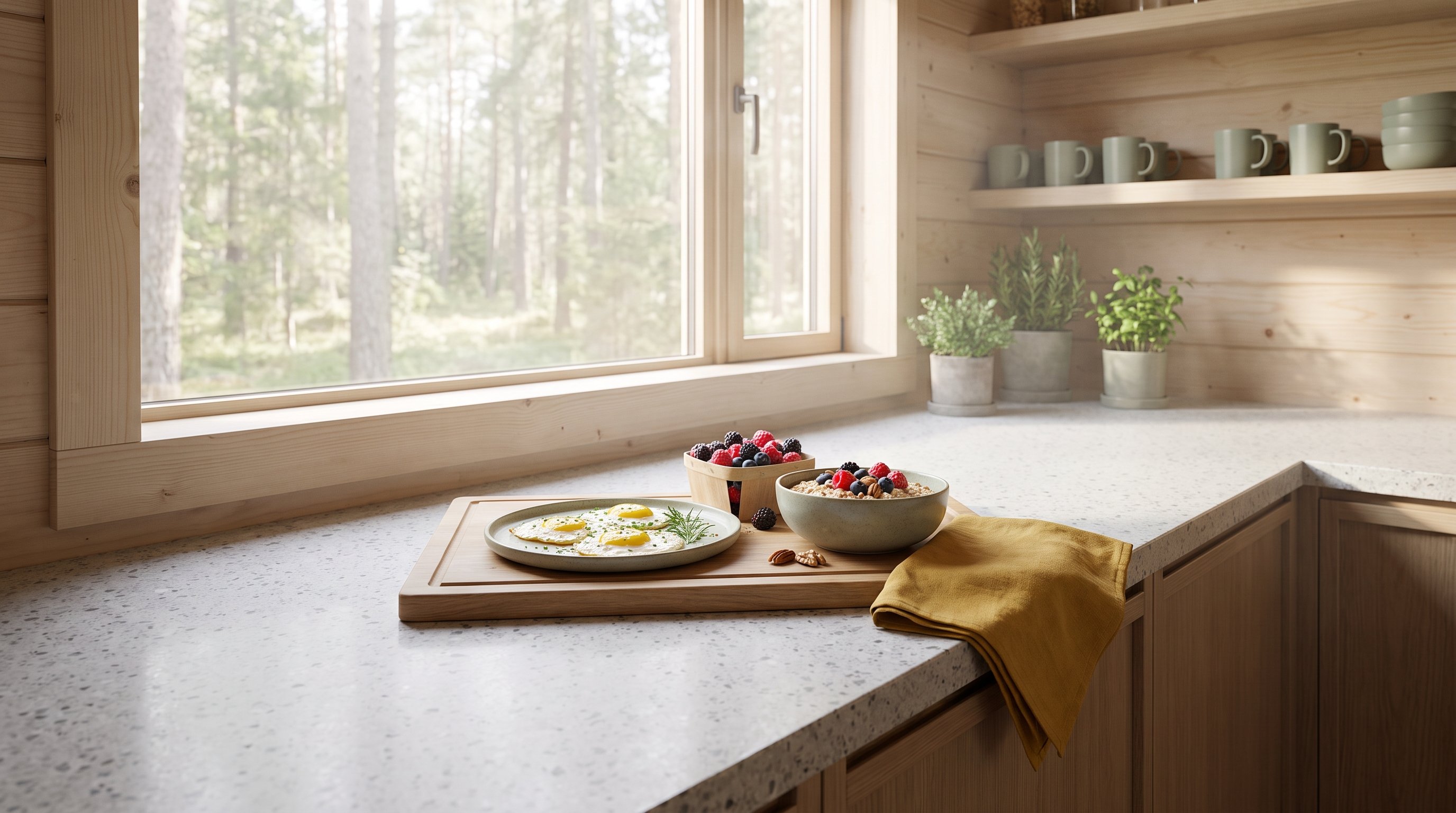
Gut health foods are whole foods rich in fibre, fermented cultures and plant diversity that feed the bacteria living in the digestive tract. No single food does this job alone - it's the pattern across a week that matters.
The gut lining and the bacteria inside it respond to what passes through repeatedly, not to a one-off smoothie or supplement. Fibre feeds bacteria, fermented foods add live cultures, and variety keeps the bacterial community broad rather than narrow.
This guide covers what actually changes gut health, a sample day of meals, where habits tend to fall apart, and how to build a routine that holds up on a normal week.
The Myth That One Superfood Fixes Digestion
Kombucha, kimchi, kefir - each gets sold as the single fix for a sluggish gut. None of them work that way on their own.
The digestive system responds to totals, not standout ingredients. A spoonful of sauerkraut on top of a low-fibre, low-variety diet barely moves the needle, because the bacteria that benefit from that sauerkraut still need fibre to survive and multiply.
The honest answer is less exciting but more useful: gut health builds from repeated exposure to fibre and fermented foods across many meals, not from one addition to an otherwise unchanged plate.
How Fibre and Fermented Foods Actually Support the Gut
Two separate mechanisms do the work here, and they complement each other rather than overlap.
Fibre Feeds the Bacteria Already Living There
Soluble and insoluble fibre from vegetables, legumes, oats and fruit pass through the small intestine mostly undigested and reach the colon, where resident bacteria ferment them. That fermentation process is what keeps the bacterial population active and diverse, rather than any single food acting as a cure.
Fermented Foods Add Live Cultures to the Mix
Foods like yoghurt, kefir, sauerkraut and kimchi contain live bacterial cultures that can join the existing gut community. They work alongside fibre, not instead of it - the cultures need something to feed on once they arrive, and that something is fibre.
What Actually Decides Whether Gut Health Foods Pay Off
Three factors decide whether a gut-focused eating pattern makes any real difference, and they matter in this order.
The Three Factors That Matter Most
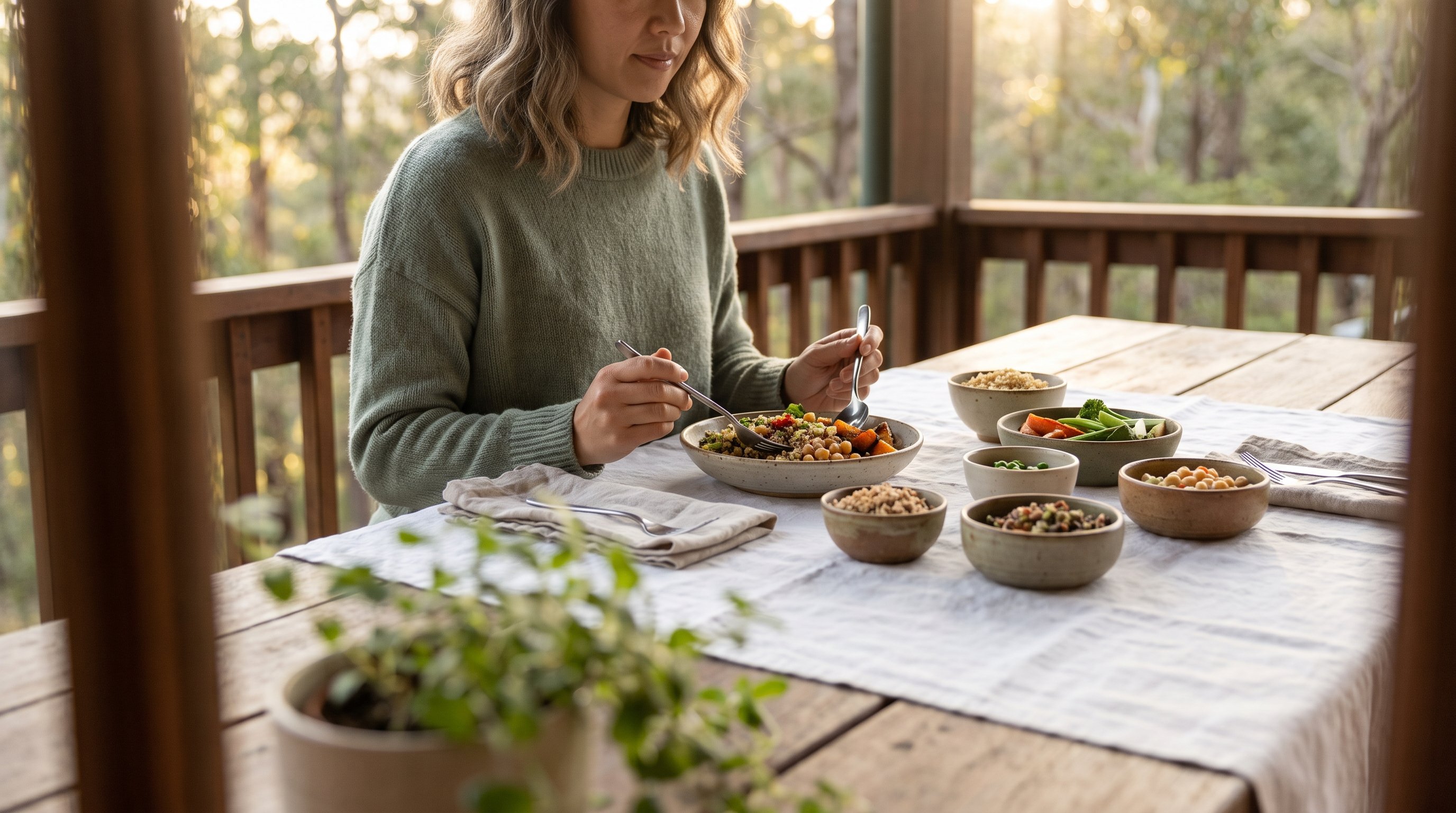
- Plant variety across the week - different plants feed different bacterial species, so eating the same three vegetables on repeat limits the diversity of the gut community far more than eating less fibre overall.
- Consistency over any single meal - one fibre-rich dinner does little if the rest of the week runs on refined carbohydrates and little else; the gut responds to patterns held over weeks.
- Enough total fibre, not just the right type - fermented foods get the attention, but a diet low in overall fibre limits what those live cultures can actually do once they arrive.

Get those three right and the rest - which specific ferment, which specific fibre source - matters far less than most food marketing suggests.
A Sample Day Built Around Gut-Supporting Foods
This is one way to structure a day around fibre and fermented foods without overhauling every meal.
| Meal | Food Choice |
|---|---|
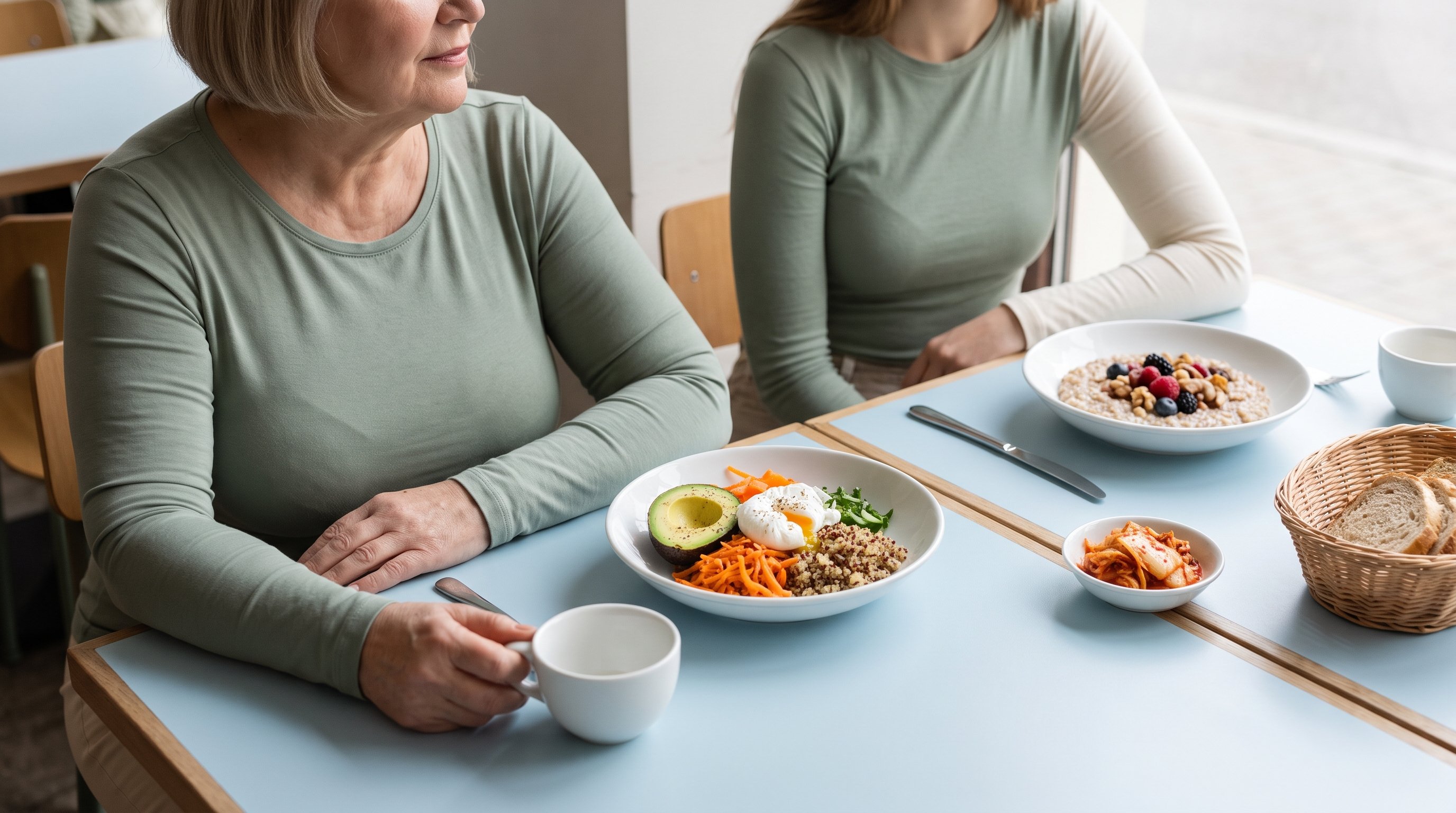
| Breakfast | Oats with berries and yoghurt |
| Lunch | Lentil salad with mixed greens |
| Snack | Apple with a small kefir |
| Dinner | Stir-fry with kimchi on the side |
Notice the pattern: fibre at every meal, a fermented food twice, and plant variety running through the whole day rather than concentrated in one dish.
Fitting Gut-Friendly Eating Around a Full Week
Real weeks involve takeaway, travel and days where cooking from scratch just isn't happening, and gut health foods still need to fit around that.
Frozen vegetables, tinned legumes and shelf-stable fermented products like miso paste all count - they don't need to be fresh or elaborate to deliver fibre or live cultures.
A meal plan built around food you already like makes this easier to sustain, because swapping in a lentil-based lunch or adding sauerkraut to a sandwich doesn't require learning a new cuisine. A balanced approach to eating focuses on small swaps inside familiar meals rather than a complete reset of what's on the plate.
When Gut Changes From Food Start to Feel Different
There's no fixed point where gut health foods suddenly show a result - it varies by person and by how much the diet changes relative to before.
What tends to happen is gradual: meals feel more settling, energy after eating feels steadier, and the routine of including fibre and ferments stops feeling like an effort and starts feeling like how you eat.
The people who stick with it long enough to notice anything are usually the ones who built it around meals they were already eating, rather than adding a separate list of gut foods on top of an unchanged diet.
Mistakes That Undo a Gut Health Food Routine
Relying on One Fermented Food and Nothing Else
A daily kombucha with no other dietary change rarely shifts anything on its own. Pair it with regular fibre from vegetables, legumes and whole grains so the live cultures have something to work with.
Eating the Same Few Vegetables Every Week
Repetition limits bacterial diversity even if the total fibre looks fine on paper. Rotate in different vegetables, legumes and grains across the week rather than defaulting to the same two or three.
Cutting Out Whole Food Groups to 'Reset' the Gut
Removing entire categories of food rarely helps and often reduces the fibre variety the gut relies on. Swapping specific meals for higher-fibre versions works better than blanket restriction.
Expecting a Fast, Visible Change
Gut composition shifts slowly and the signs are often subtle - steadier digestion, fewer energy dips - rather than dramatic. Judge the routine over weeks, not days.
Building Gut Health Foods Into a Plan With Cortisol Detox
Knowing which foods help is one thing - actually working them into meals week after week is the part that usually stalls.
Cortisol Detox brings together anti-cortisol meal plans, simple workouts, guided meditations and progress tracking in one place, so fibre-rich and fermented food swaps sit inside a plan you're already following rather than becoming one more thing to remember.
Keeping meals, movement and progress tracked together makes it easier to see the small, steady swaps add up rather than judging any single meal on its own.
Lower Stress Naturally
Feel Relaxed Again
Choosing Your First Gut-Supporting Swap This Week
Pick one meal this week and add either a fibre source or a fermented food to it - a side of lentils, a spoon of yoghurt, a handful of extra vegetables. That one swap, repeated, matters more than a perfect overhaul attempted once and abandoned.
A structured meal plan can help carry that swap through the rest of the week by keeping meals and progress in one place, so the next small change is easier to make than the last.
FAQ
They can support more settled digestion and steadier energy over time, but the effect comes from a consistent pattern of fibre and fermented foods, not any single meal. No food works in isolation from the rest of the diet.
Supplements can add live cultures, but without enough fibre in the diet those cultures have little to feed on once they arrive. Whole food swaps tend to cover both sides of the equation at once.
Frozen vegetables, tinned legumes and shelf-stable ferments like miso all count toward the same goal and need far less time. A meal plan built around food you already like, such as the one inside Cortisol Detox, makes these swaps easier to repeat without extra cooking.
The gut's bacterial community shifts gradually in response to repeated eating patterns, not overnight changes. Tracking meals over weeks rather than days makes the gradual shift easier to see.
Share this post