Foods That Reduce Bloating: Practical Steps for Fast Relief
By:Author:Cortisol Detox Editorial
Updated on:October 20, 2026

- Can Food Choices Actually Reduce Bloating
- How Bloating-Easing Foods Actually Work Inside You
- How Much of These Foods You Actually Need Daily
- Food Swaps Beat Cutting Out Entire Meals
- Fitting Bloat-Easing Foods Into a Normal Week
- The Myth That One Food Flattens Bloating Overnight
- What Changes Whether Bloating Actually Eases
- Mistakes That Keep Bloating Coming Back
- Building Foods That Reduce Bloating Into Your Routine
- Starting Your First Bloat-Easing Swap Today
The fastest way to ease bloating is cutting back on foods that produce excess gas or pull water into the gut, while adding foods that help things move through steadily. That means fewer fizzy drinks and heavy salt, more water, fibre spread across the day, and a bit of patience.
Bloating usually comes down to trapped gas, slow digestion, or water retention from too much sodium. Food choices affect all three, which is why swapping a few ingredients can calm things down without any drastic diet change.
This guide covers what actually causes bloating, which foods help and why, how much to eat and how often, and the mistakes that quietly keep the bloat coming back.
Can Food Choices Actually Reduce Bloating
Yes, and the mechanism is simple: bloating is mostly gas, fluid, or slow transit, and food directly influences all three.
Gas builds up when certain carbohydrates ferment in the gut faster than they can be absorbed. Fluid retention rises when sodium intake climbs, since the body holds onto water to balance salt levels in the blood.
Slow transit happens when fibre and water intake are too low, leaving food sitting longer than it needs to.
Here is the arithmetic version. A single high-sodium meal, the kind with over 2,000mg of sodium, can be close to a full day's intake in one sitting, and that extra sodium pulls in water the body then has to process.
Swap that meal for something lower in sodium and higher in potassium-rich vegetables, and the body has less excess salt to balance out. That is not a cure, it is basic input and output.
How Bloating-Easing Foods Actually Work Inside You
Two separate mechanisms are at play when food calms bloating, and both matter on their own.
Fibre and Water Keep Things Moving
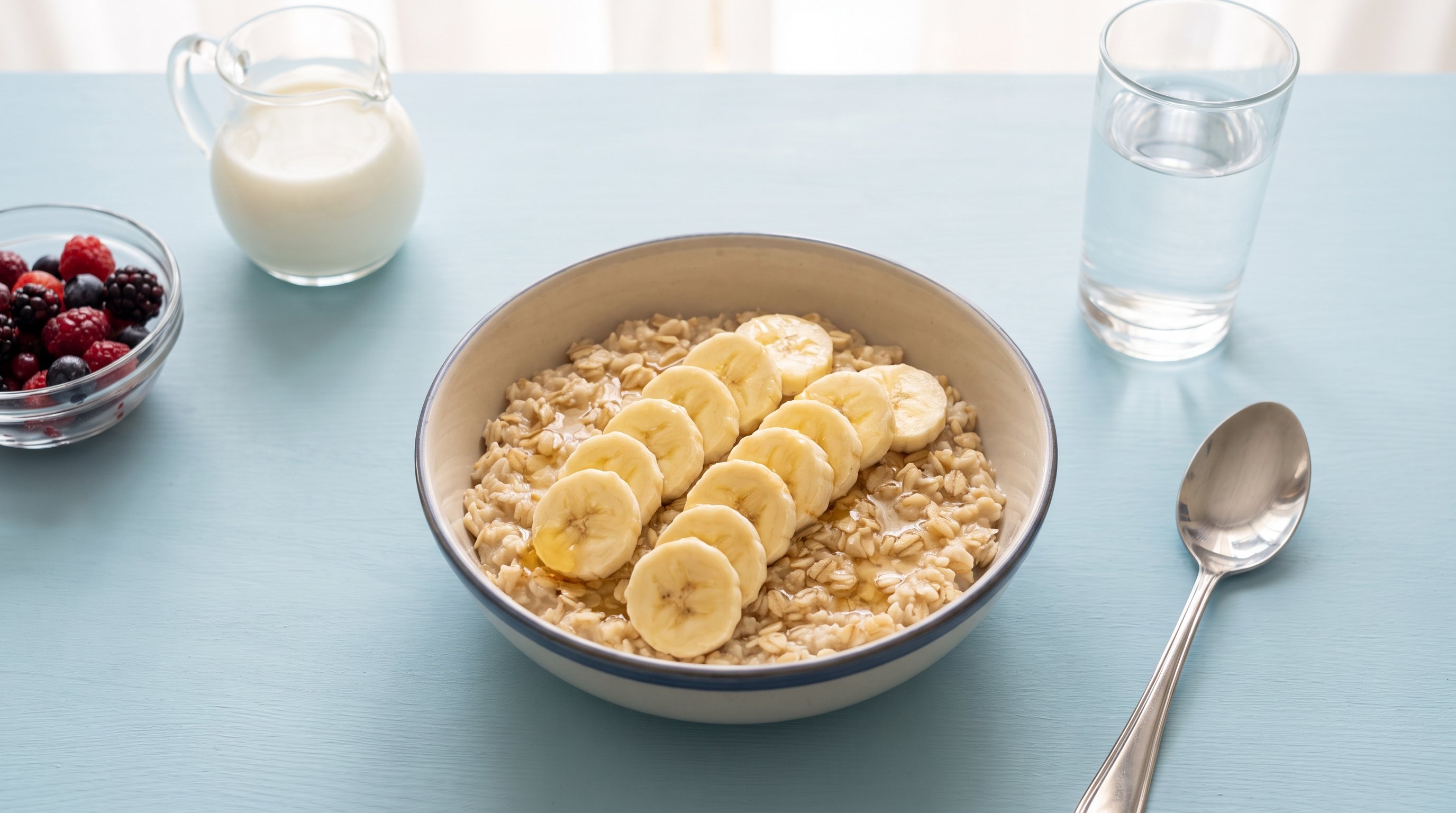
Soluble fibre from foods like oats, carrots and cooked vegetables absorbs water and softens stool so it passes more easily. Without enough water alongside that fibre, the opposite can happen, so the two need to go together.
Lower Sodium Reduces Fluid Retention
When sodium intake drops, the body needs less water to dilute it, so less fluid gets held just under the skin and around the gut. Potassium-rich foods like bananas and leafy greens help balance sodium levels further, which supports the same effect.
Neither mechanism works instantly, but both are straightforward and measurable through how meals are built.
How Much of These Foods You Actually Need Daily
There is no single magic amount, but a rough daily structure makes the approach easy to apply.
A Simple Daily Framework
Aim for fibre spread across three meals rather than one large dose, since a sudden fibre increase can itself cause gas. Pair it with steady water intake through the day and a conscious effort to keep processed, high-sodium foods to one meal or less.

| Food | Rough Amount | Why It Helps |
|---|---|---|
| Cucumber | 1 cup sliced | High water, low sodium |
| Oats | Half cup dry | Soluble fibre, gentle |
| Banana | One medium | Potassium balances sodium |
| Ginger tea | One cup | Warm fluid supports digestion |
| Leafy greens | 1-2 cups | Fibre plus potassium |
None of these amounts are strict rules. They are a starting point to adjust once you notice what sits well with your own digestion.
Food Swaps Beat Cutting Out Entire Meals
The harder route is skipping meals or cutting entire food groups to avoid bloating altogether. It can work short term, but it is hard to sustain and often backfires once normal eating resumes.
The easier route is swapping specific ingredients within meals you already eat, like trading a salty packaged sauce for lemon and herbs, or swapping white bread for oats at breakfast.
Swaps are easier to repeat because they do not ask for willpower every single day. Skipping meals asks for constant resistance, and resistance tends to run out.
Fitting Bloat-Easing Foods Into a Normal Week
Real weeks involve takeaway, social meals and days where cooking from scratch just is not happening. The goal is not perfection, it is making the lower-sodium, higher-fibre choice the easy default most of the time.
That might mean keeping a bag of cucumber and carrot sticks at your desk, or choosing the grilled option over the fried one when eating out.
A meal plan built around food you already like makes this far less effortful, since the swaps are already built into what gets cooked. Anti-cortisol meal planning approaches eating this way, focusing on steady, realistic meals rather than restrictive rules that are hard to keep up.
The Myth That One Food Flattens Bloating Overnight
No single food, drink or tea makes bloating disappear overnight, and nothing targets the stomach specifically. The body does not let you choose where fluid or fat sits, and digestion does not reset in one sitting.
What actually happens is gradual: less sodium means less water retention over days, more fibre and water mean steadier digestion over time, and fewer gas-producing foods mean less trapped air building up.
The honest answer is that consistent food choices, not one hero ingredient, are what calm bloating down.
What Changes Whether Bloating Actually Eases
A few factors decide whether these food choices actually make a difference, and they matter more than any single ingredient.
The Biggest Factors
- Sodium across the whole day - one low-sodium meal does not offset a high-sodium one later, so the daily total is what counts.
- Water intake alongside fibre - fibre without enough fluid can make bloating worse instead of better.
- How fast fibre increases - a sudden jump in fibre, rather than a gradual one, is a common cause of extra gas.
Mistakes That Keep Bloating Coming Back
Adding Too Much Fibre Too Fast
Jumping from low fibre to a very high-fibre day can cause more gas, not less. Increase fibre gradually over a week or two instead of all at once.
Forgetting the Water
Fibre needs fluid to do its job properly, and skipping water while increasing fibre intake can slow things down further. Keep a glass of water with every fibre-rich meal.
Only Watching One Meal
Eating well at breakfast and lunch does not cancel out a very high-sodium dinner. Sodium and fibre both need to be considered across the full day, not meal by meal.
Expecting Results by Tomorrow
Bloating that built up over months of habits will not clear in a single day of better eating. Give any swap a week or two before judging whether it is helping.
Building Foods That Reduce Bloating Into Your Routine
Knowing which foods help is one thing, fitting them into a normal week without constant decision-making is another.
Cortisol Detox pairs anti-cortisol meal plans with simple tracking, so the lower-sodium, higher-fibre swaps become the default rather than something you have to remember to choose every day. It also keeps progress tracking, water and meals in one place, so patterns around bloating become easier to spot over time.

Lower Stress Naturally
Feel Relaxed Again
Starting Your First Bloat-Easing Swap Today
Pick one meal today and make one swap: less sauce, more water, a handful of greens instead of a side of bread. That single change is enough to start noticing what your body actually responds to.
Over a week or two, those small swaps add up into a pattern worth keeping, and Cortisol Detox can help keep that pattern steady once it starts working for you.
FAQ
Water-rich, low-sodium foods like cucumber and plain leafy greens tend to show an effect soonest because they do not add to fluid retention. There is no instant fix, but these choices work with the body's own balancing process rather than against it.
Not reliably, and it is harder to sustain than swapping specific ingredients within meals you already eat. Most bloating responds to gradual changes in sodium, fibre and water rather than removing entire categories of food.
Yes, if fibre increases too quickly the gut needs time to adjust, and some extra gas is common at first. Raising fibre slowly over a week or two, with enough water alongside it, usually settles this down.
Cortisol Detox builds lower-sodium, higher-fibre meals into a plan you can actually stick to, rather than leaving the swaps up to daily willpower. Keeping meals and water in one place also makes it easier to notice what triggers bloating in the first place.
Share this post